

Tienen. The Grote Gete valley
project: English, pll_6ad9b6d2162c0, rewetting
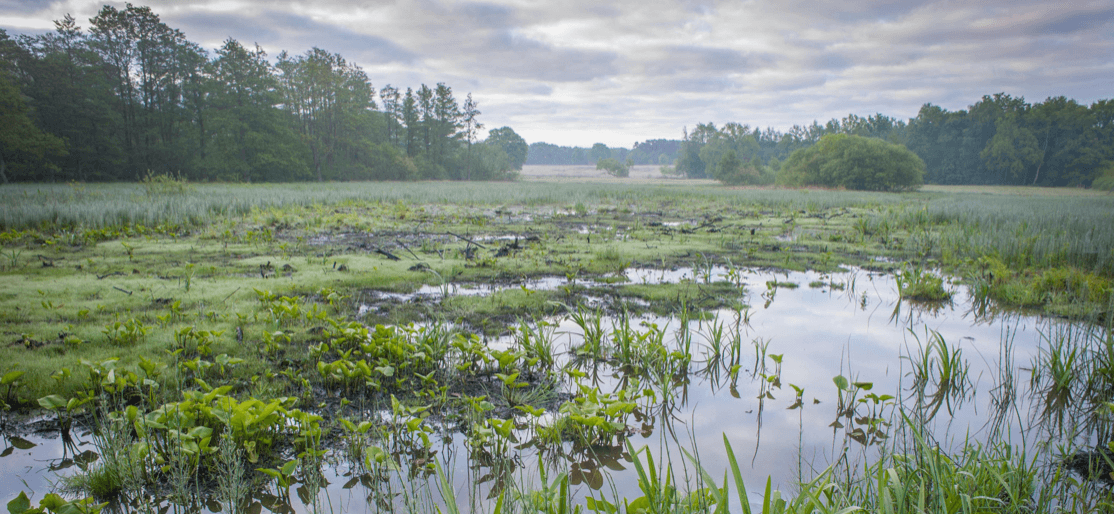
What happens when you wring out a sponge that is thousands of years old and then never give it water again? It dries out, crumbles and releases everything it held back into the air. That is exactly what is happening to our peatlands today. In the heart of the Kempen region, this project tackles that very problem in Limburg’s Zwarte Beek valley, home to a continuous 200-hectare peat deposit unrivalled in Western Europe.
Restoration involves proven measures such as filling in ditches, removing drainage pipes, raising streambeds to keep water levels higher, reconnecting historic meanders and pools, and removing the nutrient-rich topsoil so that a flow-through wetland can develop again. In the Zwarte Beek valley, these interventions raise groundwater levels throughout the central valley. Nature is literally being reshaped into a sponge. After all, waterlogged peat is one of the most efficient carbon sinks we have. It grows slowly, barely decomposes under wet conditions and therefore retains carbon for centuries. Once peat dries out, that process reverses. Dried-out peat emits up to 11 tonnes of CO₂ per hectare per year. In the Zwarte Beek valley alone, up to one million tonnes of CO₂ could be released if the peat continues to dry out and decompose. Rewetting is therefore no luxury: it is the cheapest way to prevent carbon already stored there from re-entering the atmosphere.
The calculation follows Claire’s ISO 14064 methodology for rewetting. The starting point is the project boundary: the delineated area of peat soil that is actually rewetted. This is compared with a baseline scenario in which drying continues and the peat keeps oxidising. Following rewetting, this oxidation stops and net emissions fall to zero; the limited methane emissions associated with wetland habitats are conservatively excluded from the claimed benefit. The difference between the two scenarios represents the avoided emissions, which are attributed entirely to rewetting. External validation and Claire’s scientific council assess the figures, just as they do for our other projects.
Specifically, the project covers 100 hectares of peat in the Zwarte Beek valley, accounting for approximately 1,200 tonnes of avoided CO₂ emissions per year. Its impact, however, goes beyond the numbers. The area being restored is also crane habitat, a haven for common snipe and a home to great crested newts and tree frogs. The waterlogged peat stores water, helping the valleys cope with drought and reducing flood peaks downstream. Carbon, water and biodiversity all benefit, making this project particularly attractive to those looking to offset their emissions locally and demonstrably.
Location: Zwarte Beek valley (Beringen, Limburg)
Availability: 1200 tonnes
Contact: christoph@claire-co2.com

